
Blog
Depreciation Tax Shield Calculation

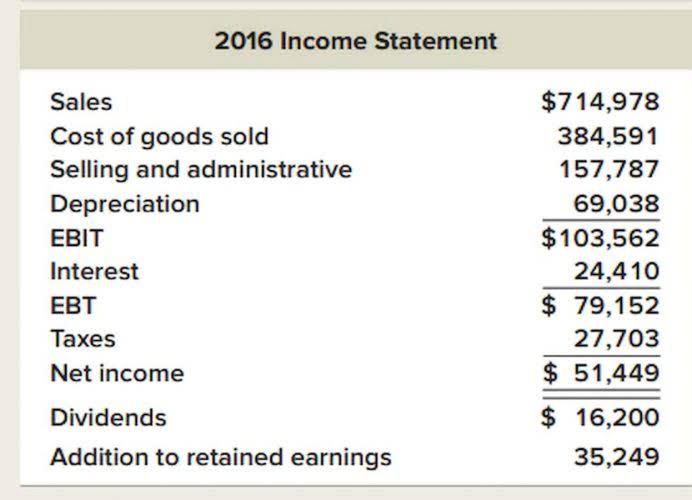
The income tax usually has a significant impact on the cash flow of a company and therefore needs to be taken into account while making capital budgeting decisions. An investment that looks desirable without considering income tax may become unacceptable after considering it. Before explaining the impact of income tax on capital budgeting decisions using a net present value (NPV) example, we need to understand three important concepts. These concepts are after-tax benefit, after-tax cost and depreciation tax shield.

Increases Cash Flow
The traditional method is based on the idea that the tax shield is a constant proportion of the project’s cash flows. This method assumes that the project is financed with a constant debt-to-equity ratio and that the interest rate is constant over time. The tax shield is calculated as the product of the tax rate, the interest rate, and the debt amount.
How is depreciation tax calculated?
By optimizing tax-efficient strategies, businesses can enhance shareholder wealth and achieve sustainable growth. Remember that tax laws and regulations vary by jurisdiction, so consulting with tax professionals is essential for accurate calculations and effective tax planning. To optimize the benefit of depreciation tax shield, companies should consider the use of an accelerated depreciation approach to depreciate their fixed assets. The reason is that, this technique provides a larger depreciation as tax deductible expense in early years of asset’s economic life and less depreciation in later years. Accelerated depreciation is a tool for taxpayers to defer the payment of income tax until some later years by deferring the recognition of a portion of taxable income.
How to Calculate Tax Shield
By deducting the interest expense from taxable income, the company effectively reduces its tax liability, resulting in a lower cost of debt. This reduction in the cost of debt can make borrowing more attractive compared to other financing options. From a corporate perspective, tax shield allows companies to lower their tax depreciation tax shield formula liabilities by deducting various expenses from their taxable income.

How Tax Shields Work

Understanding and calculating the Tax Shield is crucial for evaluating the tax implications of capital investments. It allows companies to optimize their capital structure decisions, ledger account minimize their tax liability, and ultimately enhance their financial performance. By considering the Tax Shield, companies can make informed decisions that align with their strategic goals and maximize shareholder value. Understanding capital investments is crucial for making informed financial decisions. By considering factors like ROI, payback period, and tax implications, individuals and businesses can effectively evaluate and optimize their investment strategies. Remember, each investment is unique, and it’s essential to assess the specific circumstances and goals before making any investment decisions.
- Under U.S. GAAP, depreciation reduces the book value of a company’s property, plant, and equipment (PP&E) over its estimated useful life.
- This can be achieved by deducting allowable expenses like mortgage payments, depreciation, or amortization from their income.
- By considering the Tax Shield, companies can make informed decisions that align with their strategic goals and maximize shareholder value.
- The net present value (NPV) of the project is then obtained by discounting the cash flows and the tax shield at the weighted average cost of capital (WACC).
- Covenants are termed as points or restrictions that an organisation has to agree to for obtaining the loan or debt.
By reducing the taxable income, the tax shield effectively lowers the amount of taxes that a company or individual needs to pay. They often do this in one of two ways, either through capital structure optimization or accelerated depreciation methods. A depreciation tax shield is defined as the amount of money that can be deducted from your taxes due to the depreciation of your assets. It represents the tax https://elhacene.net/2025/06/06/the-future-of-blockchain-in-accounting-2/ savings achieved by deducting depreciation expenses from taxable income. From an accounting perspective, the depreciation tax shield is a reflection of the principle that expenses should be matched with the revenue they help to generate.
By understanding their impact, businesses can optimize tax savings, enhance cash flow, and build financial resilience. So, next time you see those quiet heroes on your financial statements, nod appreciatively—they’re working hard to shield your wealth. In NPV calculations, incorporate the tax shield by discounting the tax-adjusted cash flows at the appropriate cost of capital.
- Complete 6 short models and 6 real-life case studies and master the key skills for PE interviews, from paper LBOs to detailed models.
- The formula for tax shields is very simple, and it is calculated by first adding the different tax-deductible expenses and then multiplying the result by the tax rate.
- If what the taxpayer has paid in medical expenses exceeds what standard deduction covers, then the taxpayer may decide to itemize it in order to get a tax shield which is larger.
- Capital investments refer to the allocation of funds towards long-term assets or projects that are expected to generate income or appreciate in value over time.
- Interest expenses on certain debts can be tax-deductible, which can make the entire process of debt funding much easier and cheaper for a business.
However, the interest expense linked with a mortgage is tax-deductible, which offsets against the individual’s taxable income. Capital budgeting calculates the project’s cost; the best project determines the lowest cost. Depreciation is a non-cash expense; only the depreciation tax shield will be reduced from the operating profit. Capital budgeting determines whether it is beneficial to purchase the asset, go for rent, or lease the asset. Sure, let’s say a company purchases a piece of equipment for $10,000 with a useful life of 5 years.

- The second expression in the second equation (CI – CO – D) × t calculates depreciation tax shield separately and subtracts it from pre-tax net cash flows (CI – CO).
- This example illustrates the direct impact of depreciation on a company’s tax liability.
- To start, an organisation may have to agree to refrain from an action like not selling back their assets.
- Each business must tailor its approach based on industry dynamics, risk tolerance, and regulatory environment.
To increase cash flows and to further increase the value of a business, tax shields are used. Depreciation tax shield can dramatically impact the NPV of a proposed project, especially when the company’s tax rate is higher and the project involves the use of costly fixed assets. Therefore, while the company paid $100,000 for the machinery, the actual after-tax cost is effectively lowered to $73,000 ($100,000 – $27,000) thanks to the depreciation tax shield. This is one of the ways companies manage their tax liabilities and improve cash flows. A depreciation tax shield is a tax-saving benefit applied to income generated by businesses. It is an indirect way to save or ‘shield’ cash flows from taxes through the use of depreciation.